

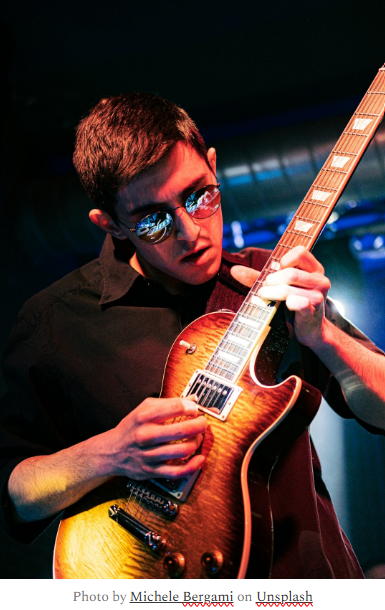
The moment you noticed the tension in your hand, you paused with concern. The passage you’d played a hundred times suddenly had a new quality — a tightness running from your forearm down through your fingers. And then, almost certainly, a voice arrived. It might have been your teacher’s actual words or just the version of them you’d internalized over years: Relax! Stay relaxed! Just relax your hand!
So you tried. You directed your attention at the tension and told it to release. And if you’re like most of the musicians I’ve worked with, something strange happened: the tension got worse. The hand you were trying to loosen seemed to grip even harder. You played through it anyway — or stopped, frustrated, wondering what was wrong with you.
The good news: Nothing is wrong with you. The instruction just doesn’t work the way we think it does.
Subscribe now
Here’s what’s actually happening. Tension in your playing isn’t a state you’ve chosen — it’s a coordination pattern your nervous system learned alongside your technique. Every time you practiced a difficult passage with effort, your body remembered not just the notes but the entire physical experience of playing them: the bracing in your forearm, the tightening of your jaw, the grip in your fingers. Over time, those elements became part of the same learned whole. The music and the tension arrived together.
This is what I call the Try-Harder Trap. When we identify a problem in our playing — tension, stiffness, the hand that won’t cooperate — the instinct is to apply effort toward fixing it. We direct attention, we concentrate, we try to force a change. But that very act of trying is itself effortful. And effort, for a nervous system that has learned to associate effort with tension, produces more of the same. You can’t out-effort a coordination habit. The harder you try, the deeper in you go.
The instruction to “relax” lands in this context as a command — and commands require effort to follow. The moment you direct attention at relaxing your hand, you’ve already added another layer of effortful concentration to the situation. Your system has one basic mode for responding to commands: try harder. And trying harder is exactly what you don’t need.
What actually helps isn’t a command. It’s a reduction.
I came to this understanding years into my own playing, when I started studying the Alexander Technique and encountered an idea that seemed almost absurd at first: do 2% less. Not “relax.” Not “release.” Not “let go.” Just do very slightly less than whatever you’re doing — less tension in the hold, less pressure in the press, less grip in the bow arm — without changing what you’re playing.
The difference is subtle but significant. “Relax” asks you to achieve a new state. “2% less” asks you only to reduce something already happening. You’re not removing effort entirely — you’re just discovering what the floor of it is. And when you experiment that way, what you often find is that you’ve been using considerably more effort than the music actually requires.
The other practice I return to constantly is what I call the Magic Pause — a moment before you begin a tricky spot where you do nothing at all. No preparation. No setup. No intention to fix what’s wrong. Just a pause in which you notice where your body is, without trying to change it. It sounds too simple. It works because it interrupts the momentum of the learned pattern before it can fully activate. You’re not breaking the habit in one pass — but you’re creating a tiny gap in the automatic sequence, and in that gap something different can begin.
Neither of these is a cure. They’re a beginning — the beginning of treating tension not as an enemy to defeat but as information about how your nervous system has been operating. The body that braces and grips isn’t failing you. It learned what it was taught. And what it learned, it can also unlearn.
If you want to explore this in real time, I run a free weekly session called the Musician’s Tension Reset Lab. We work with exactly these ideas, on your own instrument, in a small group setting. You can join us at soulforcearts.com/tensionreset. Come curious.
Joseph Arnold
Violinist, Alexander Technique Teacher, author, and Director of the Soulforce Arts Institute
SoulforceArts.com

